

Italian public telephones are disappearing from the streets, but they are not disappearing from history. WPC Club and the Museo Telefonia Pubblica are launching the Italian Public Telephones Catalog, a new project to compile the first official catalog of Italian public telephones. Every collector can take part, and every contributor will be credited by name.
Article Contents
A New Project Born from a Structural Partnership
When we announced our partnership with the Museo Telefonia Pubblica, we described it as a long-term collaboration, not a one-off initiative. This project is the proof. After Contribute to History, developed with the Phonecard Museum, the catalog of Italian public telephones is the second structured project of the WPC Projects program, and the first dedicated to the machines that gave phonecards their reason to exist.
The idea is simple. Public telephones accompanied generations of Italians, from the first booths to the card-operated models of the 1990s. Yet no official catalog has ever been compiled. Models, variants, manufacturers, installations: much of this knowledge survives in the hands of collectors, in family photo albums, in technical manuals stored in a drawer. Our goal is to bring it together in one place, with scientific care and full credit to every source.
The Museo Telefonia Pubblica, the Historical Heart of the Project
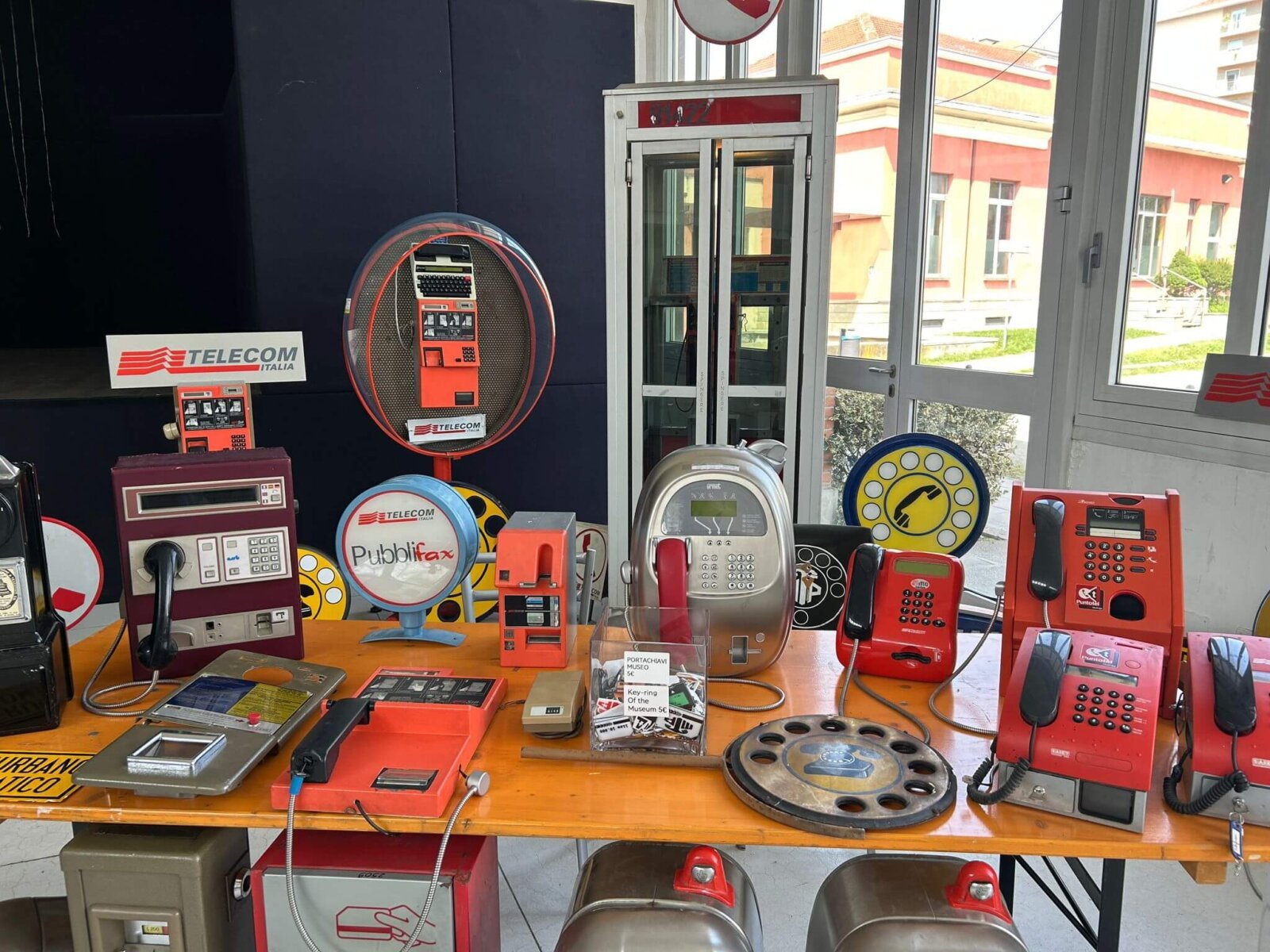
The Museo Telefonia Pubblica (MTP), founded by Leonmario Moretti in Alberi, near Parma, preserves one of the world’s most important collections dedicated to public telephony: telephones from every era, original booths, tokens, signage, and unique pieces that tell the story of how Italy communicated for over a century.
In this project, the museum provides the historical expertise: model identification, dating, verification of variants. WPC Club acts as the bridge between the collector community and the museum, collecting submissions, evaluating them, and making sure every relevant contribution finds its place in the catalog.
For phonecard collectors, this is familiar ground. Every phonecard in your collection was designed to be inserted into one of these machines. Cataloging Italian public telephones means preserving the context in which our collecting field was born.
Why Italy Needs a Public Telephones Catalog
Italy holds a special place in this story. The world’s first public telephone card was created in Italy in 1976, and Italian public telephones evolved alongside it: rotary models, token-operated units, and the card readers that millions of people used every day. Each generation of machines corresponds to a chapter of phonecard history.
An official catalog will give collectors, researchers, and enthusiasts a reliable reference: which models existed, who manufactured them, when they were installed, and how they changed over time. It is the kind of foundational work that no single collector could complete alone, and exactly what a worldwide community can achieve together.
How to Contribute
Taking part is open to everyone, members and non-members alike, and takes just a few minutes. You have two ways to contribute. The first is the project page: go to the Italian Public Telephones Catalog, fill in the form with your details and a brief description of what you have, attach up to 4 files (photos, scans, or documents in JPG, PNG, or PDF), and send. The second is WhatsApp: send your photos and information directly to +39 331 179 3728. In both cases, if you know it, you can also indicate the model or manufacturer of the telephone: every detail helps identification.
What you can send
Photos of Italian public telephones, machines in your possession, technical manuals, brochures, advertising materials, or personal knowledge about installations, manufacturers, and variants. High resolution photos are ideal, but every piece of documentation counts.
How the evaluation works
WPC Club reviews every submission together with the Museo Telefonia Pubblica, checking historical relevance and model identification. If your contribution is relevant, it enters the catalog. The evaluation is entirely on our side, and we will get back to you within a few days.
Your Name in the History of Public Telephony
As with every WPC project, contributors are never anonymous. Your name is always credited as source next to the material you provided, in the catalog and in any related publication. Every collector who takes part becomes, quite literally, part of the historical record.
If you want to know more about the museum behind this project, visit the Museo Telefonia Pubblica official website or read our partnership announcement.
Do you have a story about Italian public telephones to share? We are listening.
