

Some collectors build a collection. Others build a community around it. Warwick Stobrawe has spent the last thirty-three years doing both, and his story runs through the entire history of phonecard collecting in South Africa.
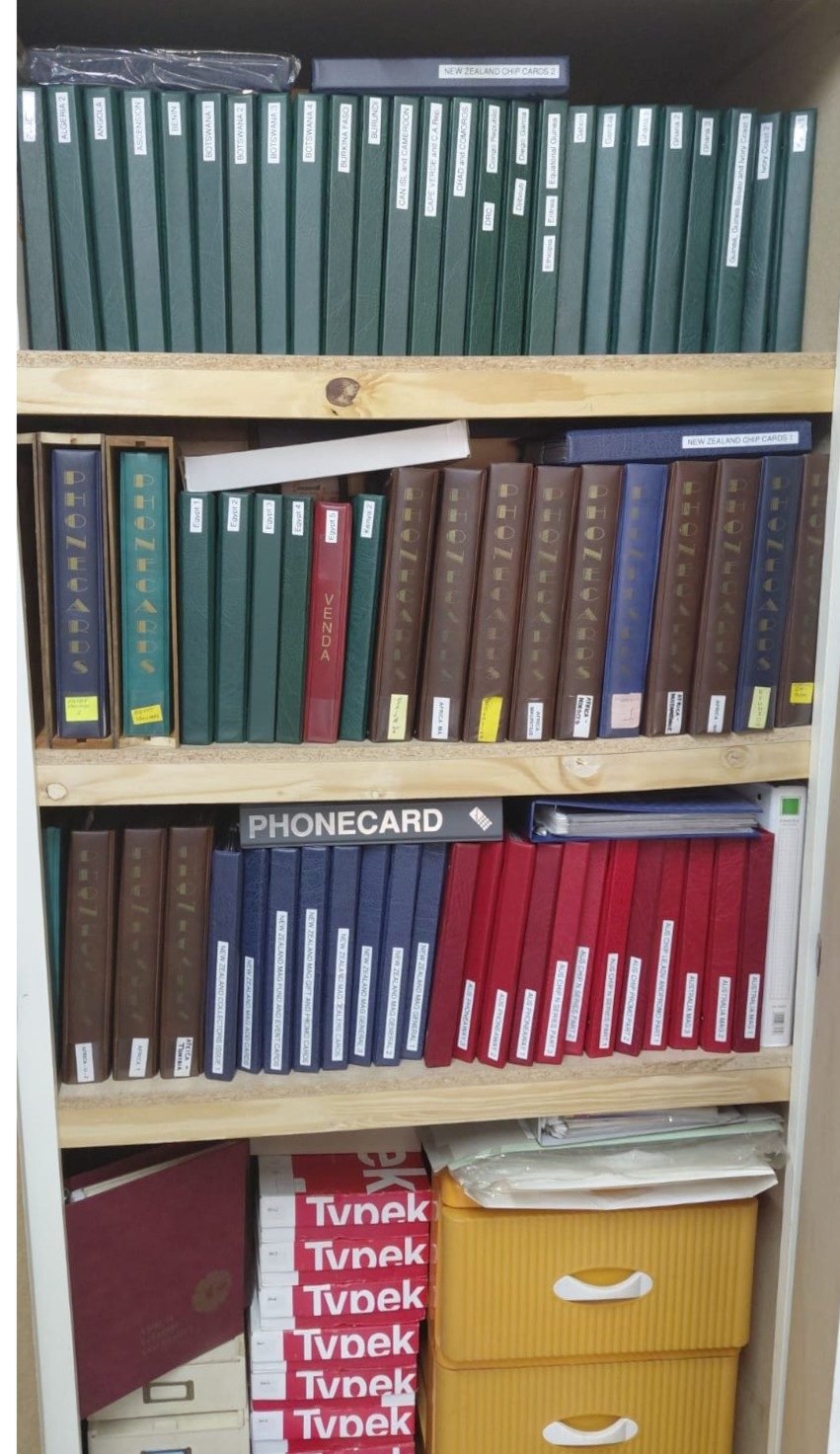
President of the African Telately Association (ATA), the South African phonecard collectors association and official partner of the WPC Club, Warwick discovered phonecards in 1993 while working at Telkom SA, when the operator launched its first Big 5 set and opened a dedicated collectors department. What started as a standing order for new issues grew into a collection of well over 200,000 phonecards, with a special focus on South Africa, New Zealand, African SIM cards and the early manufacturers Telkor and Transtel.
But Warwick’s real signature is what he did with that passion. In 1997 he brought together the collectors of KwaZulu-Natal and founded a phonecard collectors club, becoming its first president. Years later, from inside Telkom’s head office in Pretoria, he opened doors that most collectors can only dream of: engineering departments, commercial managers, even the strong room where test cards and withdrawn issues were kept.
Some of the stories he tells below, from the 1998/99 field trial cards to the Cape Town Olympic bid cards saved from destruction, are pieces of telephony history that exist today because he was in the right place at the right time, and chose to share them.
Warwick has attended every edition of the PIM in Italy, travelling from South Africa each April. His answers are a reflection on why this hobby matters: a form of collecting with a beginning and an end, worth preserving as heritage for the generations to come. We leave you to his own words.
Article Contents
How many years have you been collecting phonecards and how did this passion start? Is there a specific moment you remember, a first card, or an encounter that changed everything?
I have been collecting phonecards since 1993. It all started when I was employed at Telkom SA Ltd in South Africa, in the province of KwaZulu-Natal. When Telkom launched their first Big 5 set and their Phonecard Collectors Department, I decided to order the new issues on a standard order basis, which also included Collectors Packs.
At that stage I did not know much about phonecards, but something caught my eye (at that stage it was more the images than the technology) and thirty-three years later I’m still collecting. Little did I know about L&G cards, like the Bexa card of 1985 dished out to delegates in South Africa. In those initial years it was difficult to obtain information and I wanted to gain knowledge, so the best option was to try to gather people who share a similar interest.
In 1997 I did a lot of groundwork trying to find out who had knowledge of and an interest in phonecards. Later that year I initiated a meeting for interested parties and established a phonecard collectors club in KwaZulu-Natal, of which I became their first president.
How would you describe your collection to someone who knows nothing about this hobby? Do you have a specialisation, a favourite geographical area or theme?
Once a club was established, and although in the infant stages, members began to network, especially within KwaZulu-Natal, but some members had contacts, friends or family in the rest of South Africa and slowly information began becoming available.
Furthermore, Telkom SA also provided valuable information to their members in terms of production amounts, descriptions and so on. During this time many countries were also rolling out their payphone networks and lots of information was being shared. Looking back, I guess the biggest regret I have is that I was not technically networked, so much of the Test/Trial cards were only discovered after the processes were completed. Also, Engineering cards were nowhere to be seen.
My brother lives in New Zealand, so I managed to collect a reasonably good New Zealand collection through his assistance. Mobile phones were also taking shape and I extended my collection to include SIM cards, initially just South Africa and later Africa. I have also tried to specialise in Telkor and Transtel, which were manufacturers and operators in the early years. Every time I think I have most of the information, another card ends up being found, and this is the adrenalin rush: to find, as a friend describes it, “a nugget”.
Approximately how many phonecards do you have in your collection? And over how many years have you built it?
It is very difficult to say how many cards I have, due to the fact that my collection keeps growing and I increased my scope of collecting. If I have to guess, then it would be well over 200,000 phonecards, and as mentioned this is over 33 years.
Is there a card you would never give up? What makes it so special to you?
In 2000 I was promoted within Telkom SA Ltd and had to relocate to Pretoria, Telkom SA Head Office. I saw a huge opportunity to increase my knowledge, as the phonecard engineers and the Commercial Department were all located in the same building where I was working. This gave me opportunities to get to understand the engineering testing side and to network with some of the engineers. I also built a relationship with the commercial managers, so I was able to get first-hand news.
One day, when discussing my passion with the Commercial Manager, she invited me into their strong room safe, where lots of cards were stored for different reasons, such as faulty cards, test cards, commercially ordered cards, cards to be destroyed and so on. At this stage I had joined the Phonecard Collectors Club (now the ATA) in Gauteng and before long I was voted onto their Committee as PRO.
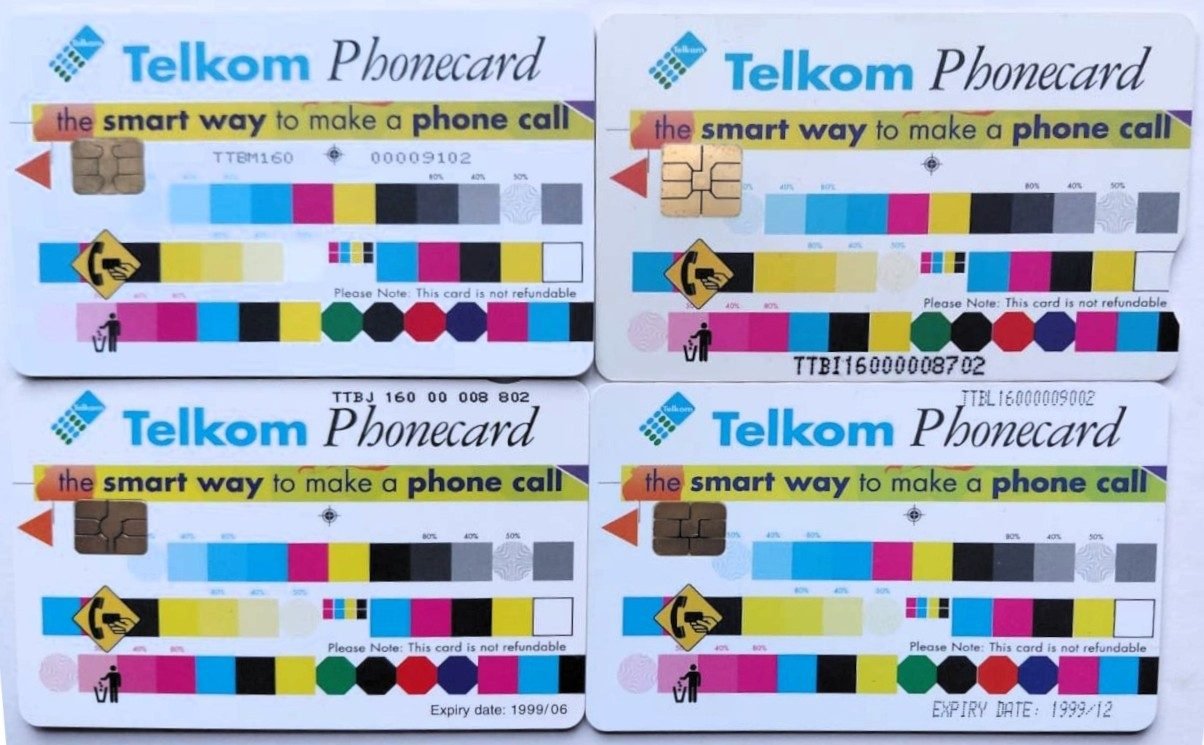
Well, I took the opportunity to use the portfolio I had within the ATA to network even more with Telkom, and eventually managed to obtain 4 sets of the 1998/99 Telkom Field Trial Tender cards, donated to the club to raise funds. Naturally I kept a set for myself, and only 3 sets landed in the hands of collectors. I regard this as my best set. It also has sentimental value, as I was a collector (wearing one cap) and an employee of Telkom (wearing the other cap).
What gives you the most satisfaction in this hobby: the search, the discovery, the history behind the cards, the contact with other collectors, or something else?
I enjoy trying to find out about a card, or obtaining the information around a card I may have found. The internet became a great source of information, and we need to salute those front runners who published many articles and catalogues.
So, what this did to me personally was to set a goal to travel abroad one day. I wanted to network on a global basis and obviously understand the bigger picture of phonecard collecting. In the early days the postage service was reasonable and it was the norm to swap or trade via postal service. However, that has become a challenge in my country, and now it’s difficult to obtain material unless you are prepared to pay courier prices.
Over the years, to gain knowledge and meet people in person, I have had the privilege of attending two SIT phonecard events (2004 and 2005) in France, one event in Prague and the PIM in Italy three times. I have also made many collector friends, and I would even go as far as saying I have an Australian collector brother from another mother. I find the hobby very relaxing and try to spend at least 5-10 hours a week on it.
Have you ever made an unexpected discovery? A card found by chance that turned out to be particularly rare or significant?
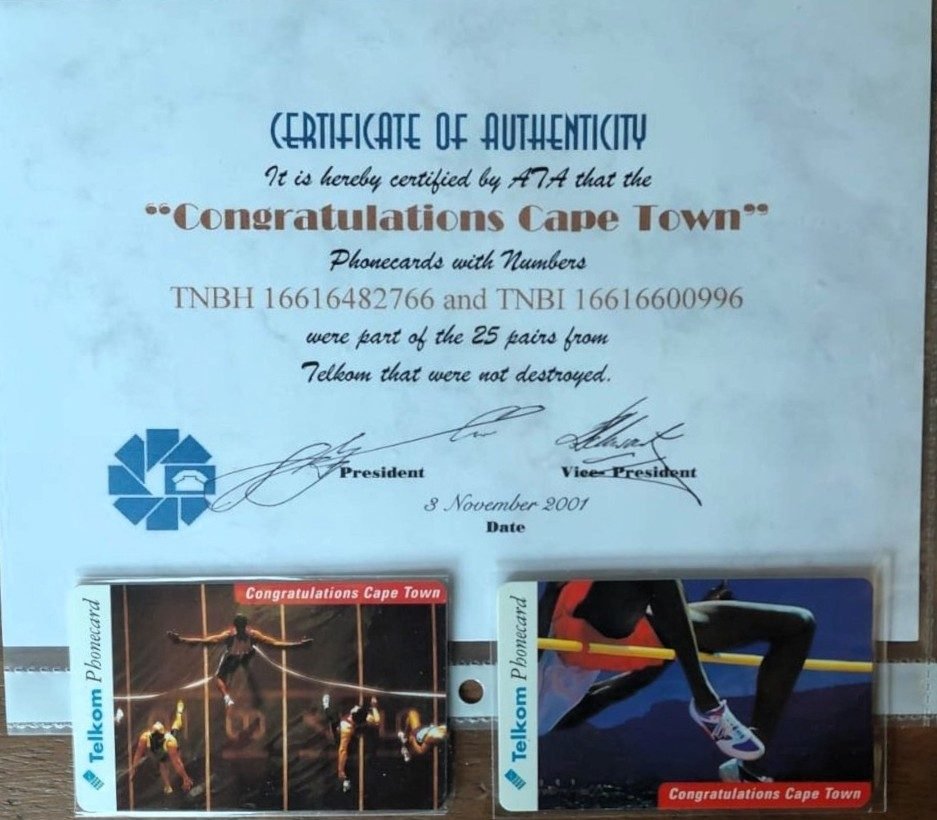
When the 2004 Olympic bids were taking place, South Africa also took part in the bidding process, and to celebrate the submission Telkom SA Ltd (one of the sponsors) produced two cards wishing Cape Town good luck for the bid. Telkom SA was very proactive and positive that South Africa would win, and manufactured two additional cards which had the wording “Congratulations Cape Town”.
These cards were obviously held back until the official winner was announced. Well, South Africa did not win, and now Telkom had to destroy the phonecards. I was very lucky to convince the powers that be within Telkom that collectors would love to have these cards as memorabilia, and asked whether they would consider donating a limited number or selling off a few sets for collectors.
I gave the assurance that the cards would only land up in albums. Needless to say, this took lots of jumping through hoops and pleading, but eventually 25 sets were donated to the African Telately Association for fundraising. I regard this as an unexpected discovery, as I was in the right place at the right time. It also assisted the ATA financially.
Have you attended PIM – Phonecards International Meeting? If so, what do you remember about that experience? If not, is it something you would like to do?
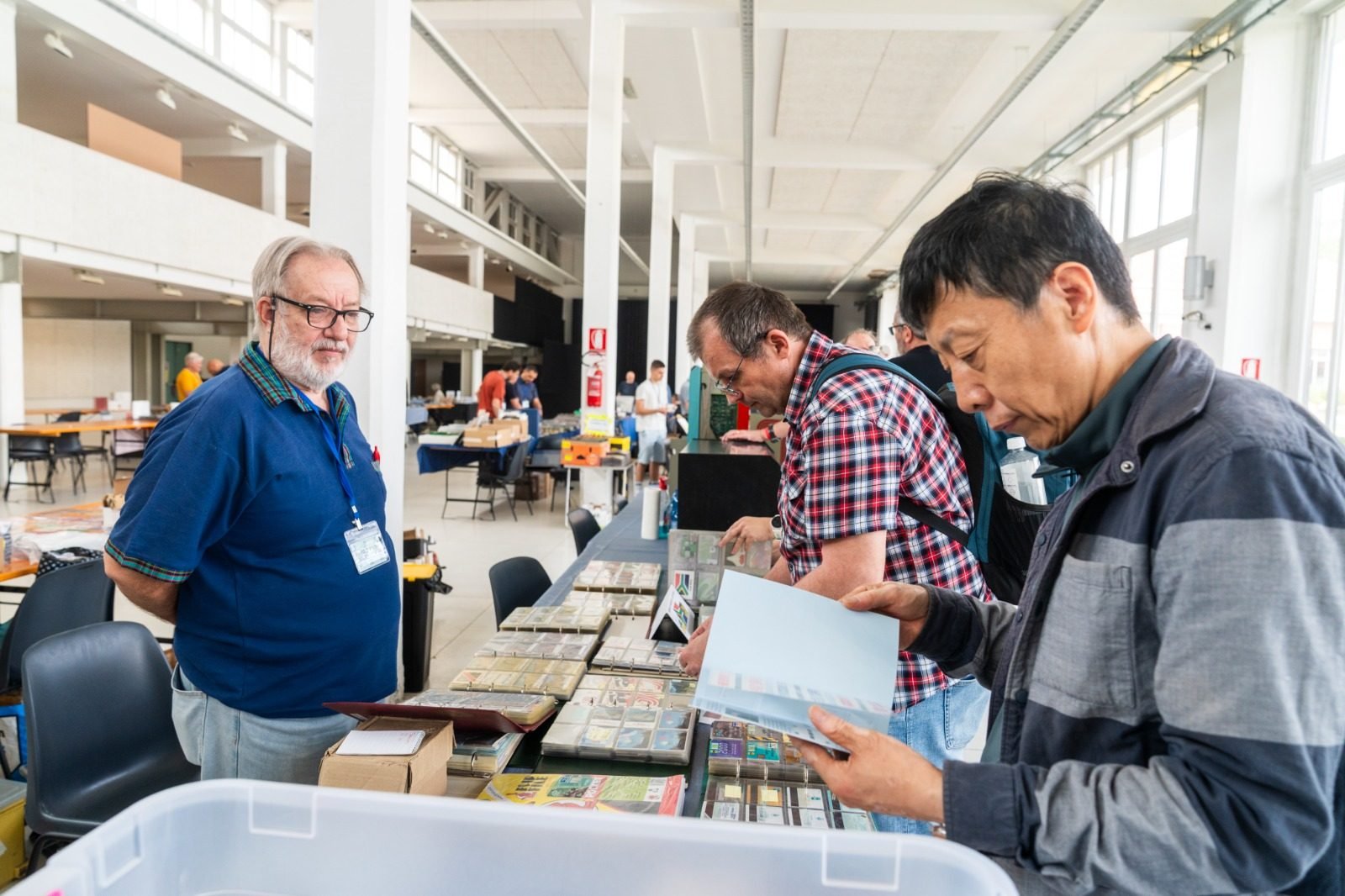
I have attended all three editions of the PIM to date. My experience was one of “Wow”, as I could not believe that in today’s times there are still so many active collectors and dealers, still very much alive in Europe. Remember, in South Africa our membership has been reducing every year, and there is very little interest from the youth.
For me it’s all about sharing knowledge with people who have similar interests to mine. What is great about this hobby is that there is a beginning and an end. Not like stamp collecting, which still continues today. I’m a firm believer in making sure that phonecard collecting should be preserved and become heritage for generations to come. I am always willing to share images, and in some cases I have forfeited a card or two from my personal collection to ensure it goes to the right place. I salute every collector who is trying their level best to ensure this hobby remains alive.
The philosophy of collecting and sharing information should be the priority, and your wealth will come in different ways, even if it’s not monetary value. We should encourage unity and share information. It does not help if you sit with the only six copies of a particular card but you are not prepared to share the information. The only beneficiary is you (in your small world), and it could be a lot more people benefitting from the information, and possibly a sale or two.
How did you find out about the WPC Club and what convinced you to join?
Through my collecting friends and networking with people who share the same philosophy principles, I did not hesitate to become part of the WPC Club. It is a non-profit association with the ultimate goal of spreading the word about our wonderful hobby, so why not be part of it.
Is there something you expect from the WPC Club community that you haven’t yet found elsewhere?
Being the president of the ATA, the South African phonecard collectors association, I fully understand the commitment, time, effort and patience it takes to manage such a club. Not everyone understands and appreciates the work that goes into such a club. I just want the WPC to continue their good work, and I’ll give as much support as I can.
The world is a global village, and maybe one day the WPC will have the privilege of hosting an even bigger event with more collectors from other continents. There are collectors in New Zealand, Malaysia, Japan, South America, the USA and so on. The challenge is to get everyone together; that is maybe an objective to be set, and to try to raise subsidies for the less fortunate collectors to attend. How else will demand be generated if the information and interest are not shared?
Is there anything about your collecting story that you would like to share, and that the previous questions didn’t allow you to tell?
No, I think I have said enough. In fact, maybe too much.
Warwick Stobrawe and the Future of the Hobby
We thank Warwick Stobrawe for sharing his story, and for three decades of work keeping phonecard collecting alive in his country. His message is one the whole community can stand behind: share what you know, because information locked away benefits no one.
You can read more about the partnership between the WPC Club and the ATA, discover the association’s history in our article celebrating 30 years of the African Telately Association, and find more interviews with our members in Collector Stories. If you are a WPC Club member with a collection to share, write to us: you could be our next interview.
