

Some collectors chase a single country. François Fossard chases the whole system. The French collector, WPC Club member, has spent nearly four decades building a phonecard collection organised around three ideas: one card for every technology in every country, the worldwide story of the Orange brand, and brand new SIM cards and recharges from across the globe. To these he adds an almost complete run of the French Publiques and the full sets of two French territories, Wallis and Futuna and the TAAF.
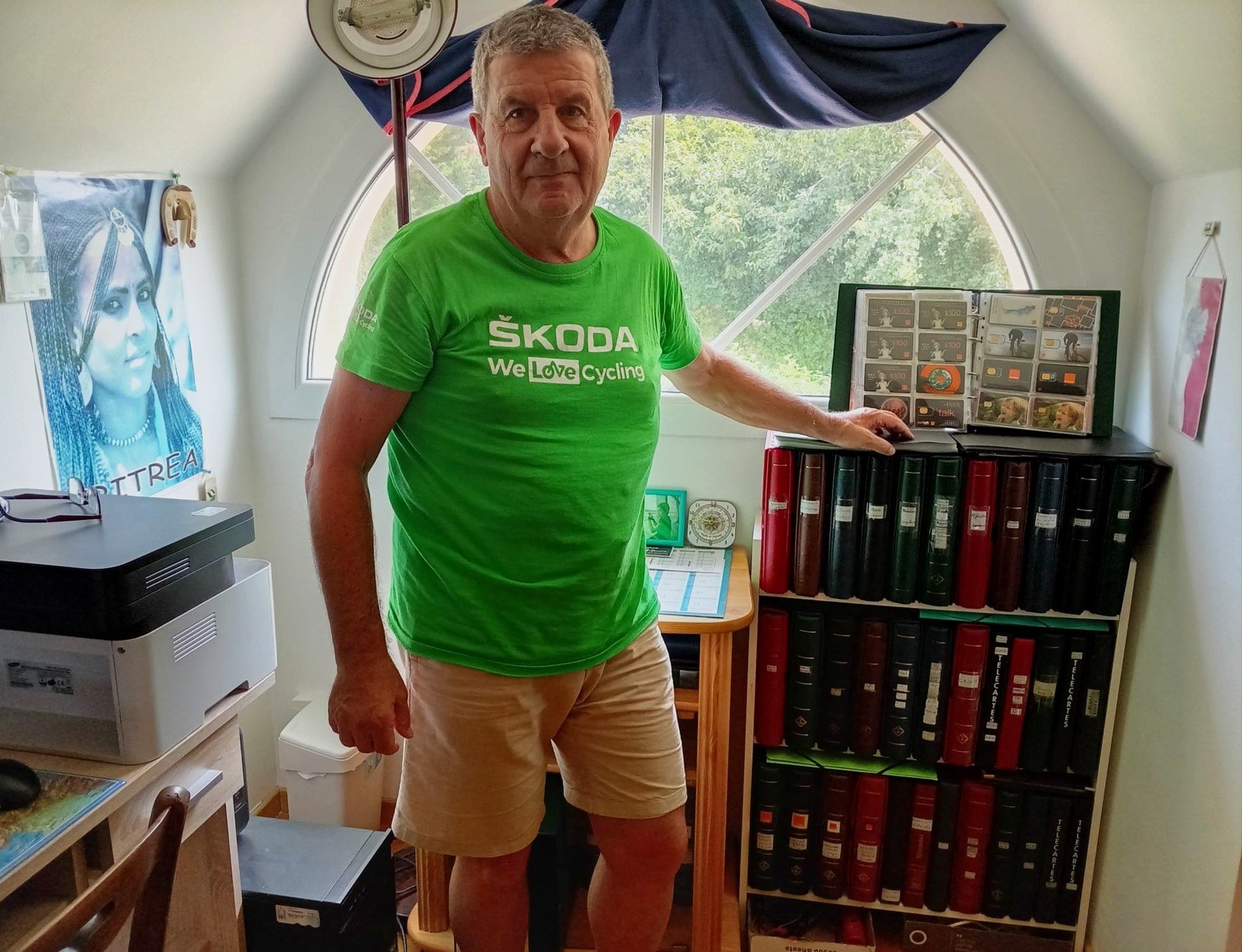
His guiding principle is disarmingly simple, a phrase he heard at the very start of his collecting life: you have to go out and find the cards. He has lived by it ever since, and his most recent acquisition trip took him all the way to the Falkland Islands in February 2026. Fittingly, his 2026 WPC membership card carries the theme “Wanderlust, Passion and Curiosity.”
François came to the WPC Club through the PIM, and his story runs through many of the people and places that hold our community together, from the legendary SIT meetings in Houilles to fellow collectors as far away as Australia. We are proud to open our Collector Stories series with his voice.
Article Contents
When did you start collecting, and how did it begin?
I have been collecting since 1986, after seeing a few phonecards belonging to another collector. Like everyone, I started out at flea markets, with small purchases and the occasional swap. At the time I had a rather fine collection of postage stamps and coins, which I eventually sold to move fully into phonecards.
My collection truly took off in the early 2000s with the SIT, the Salon International de la Télécarte, in Houilles, France, organised by Claude Mercadier, to whom I pay tribute. There I built an almost complete collection of the French Publiques, and then a worldwide Country and Systems collection. For that collection, and in particular the Tamura and Anritsu technologies, I grew close to a number of elite collectors I want to thank, especially Éric Schuenemann from Australia.
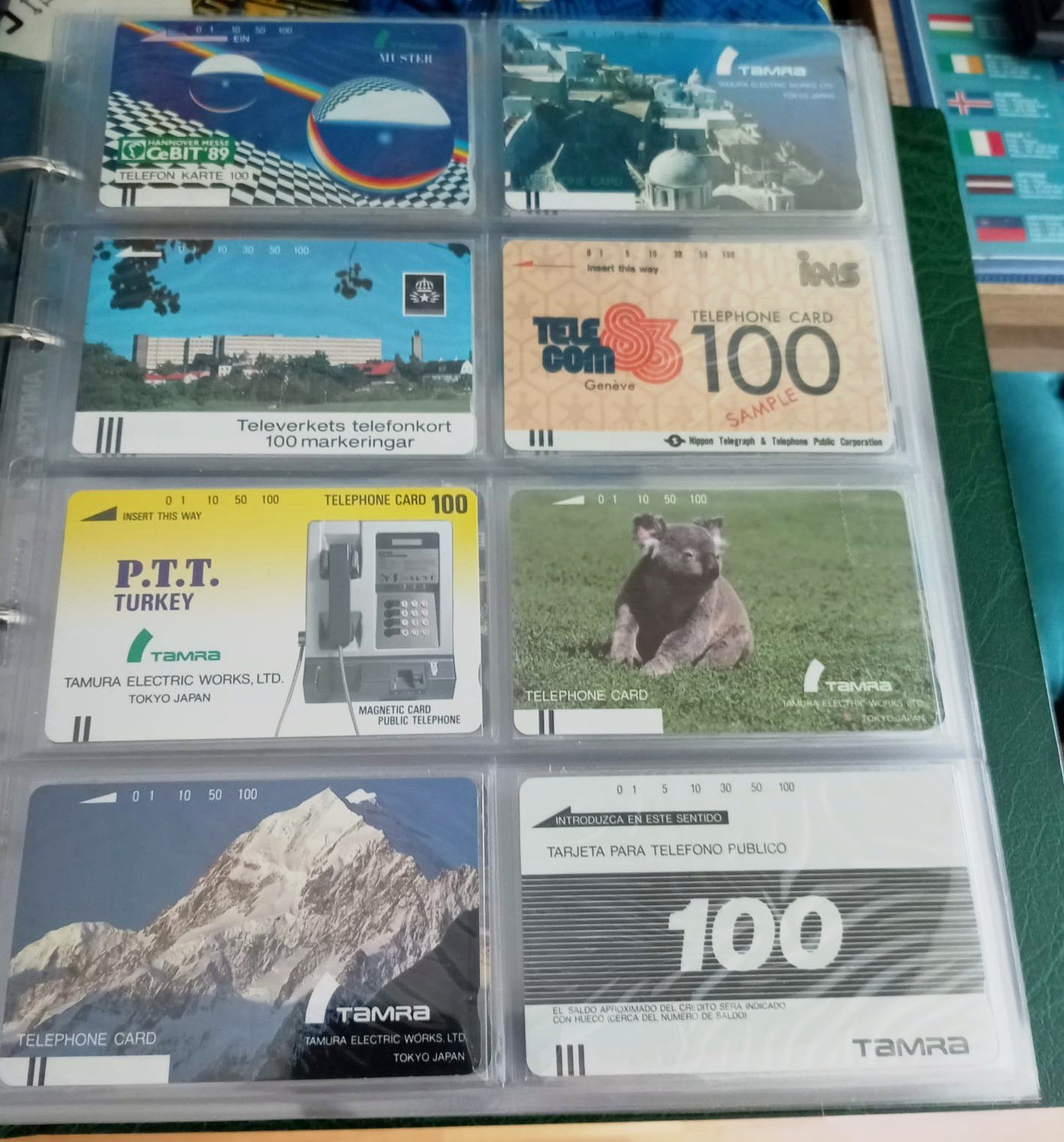
The other route to a diverse collection has been the many trips I have made, and still make. The most recent was in February 2026, for the SIM card and the various recharges of the Falkland Islands. On that note, I hold on to a phrase I heard at the very beginning of my collecting life that became a kind of guide: cards have to be gone after and found. It was almost a premonition, given today’s context, where there is barely anything new left on the market.
Another way to acquire cards, and to get to know certain collectors, has been and still is, to a small degree, websites such as eBay and Delcampe.
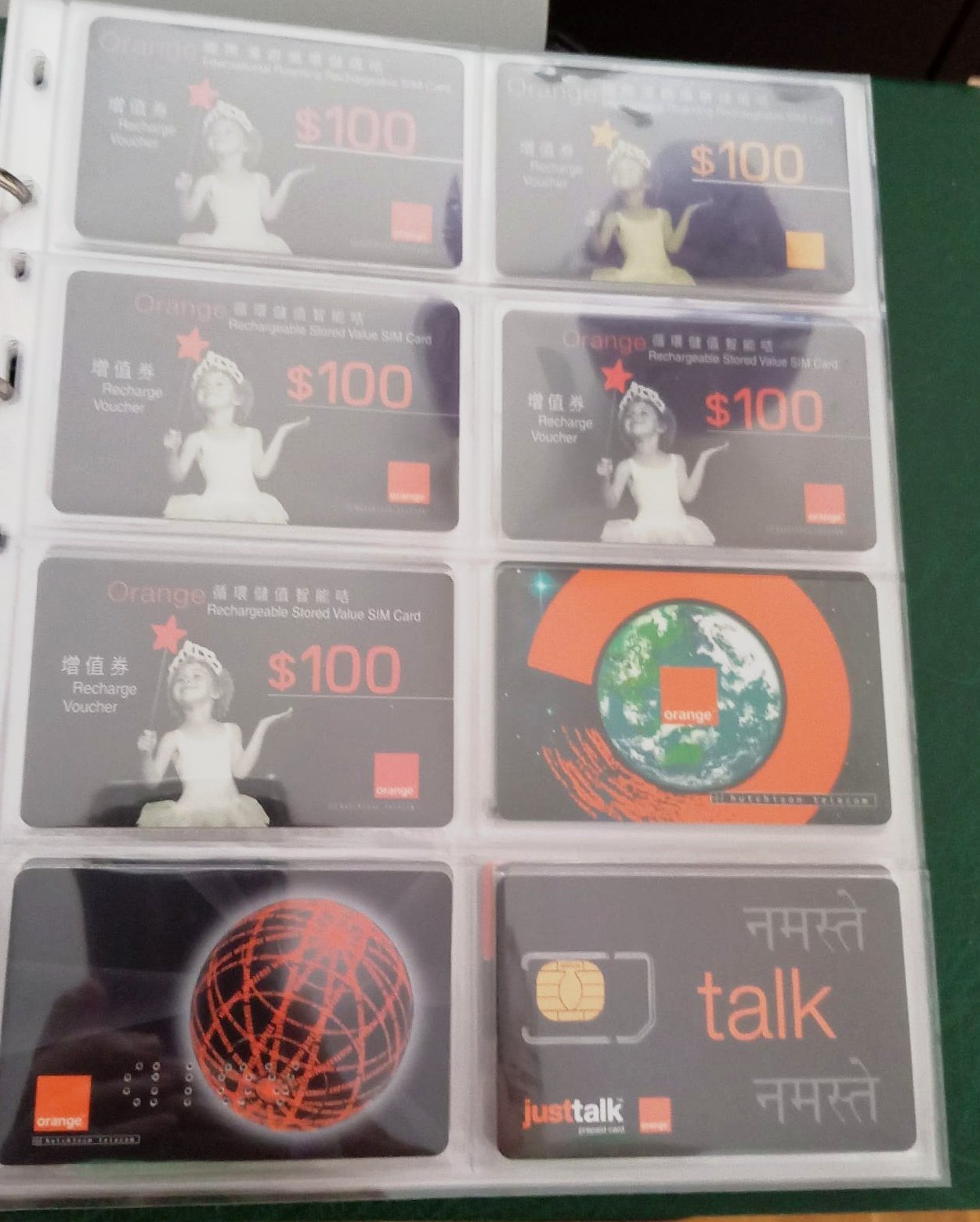
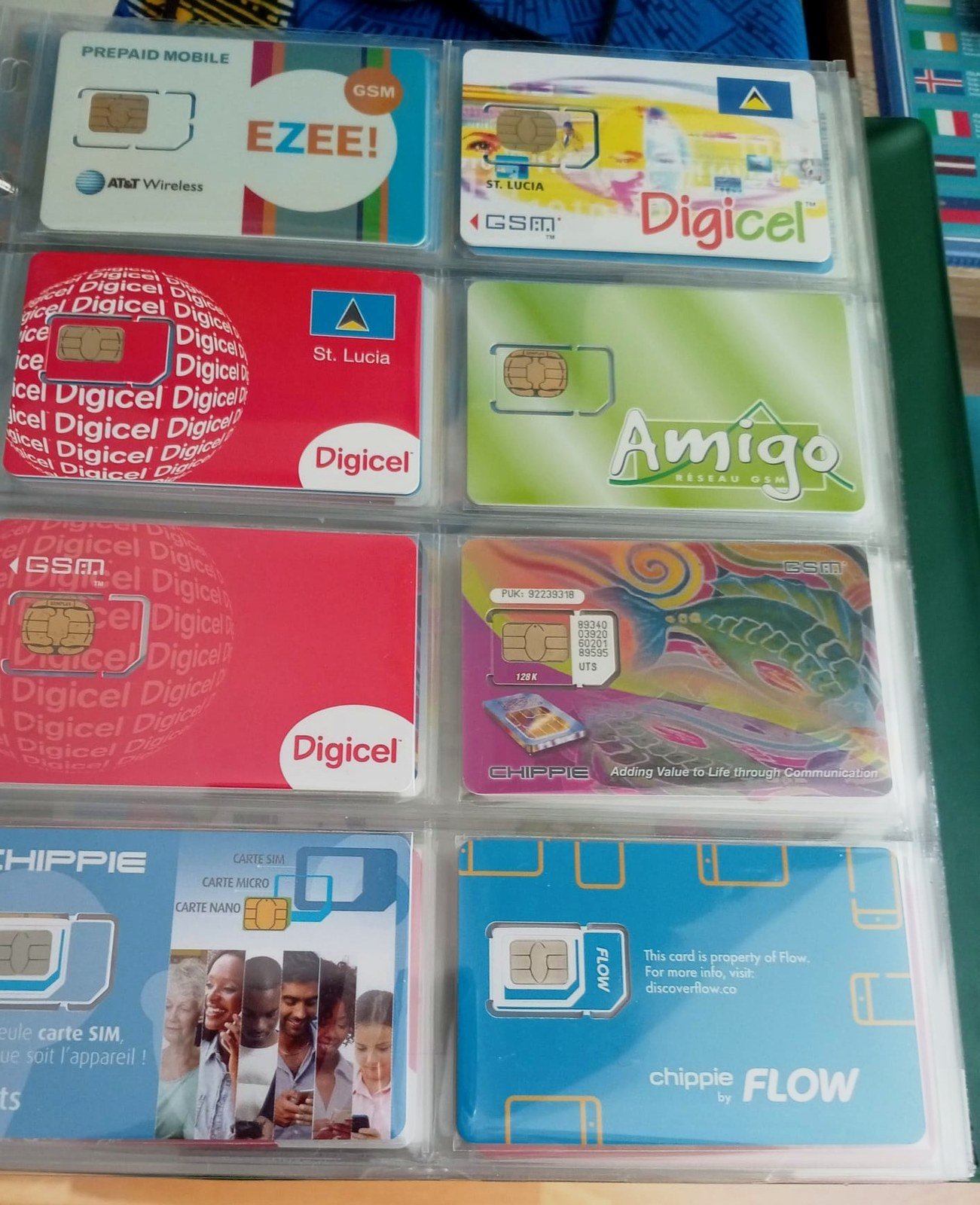
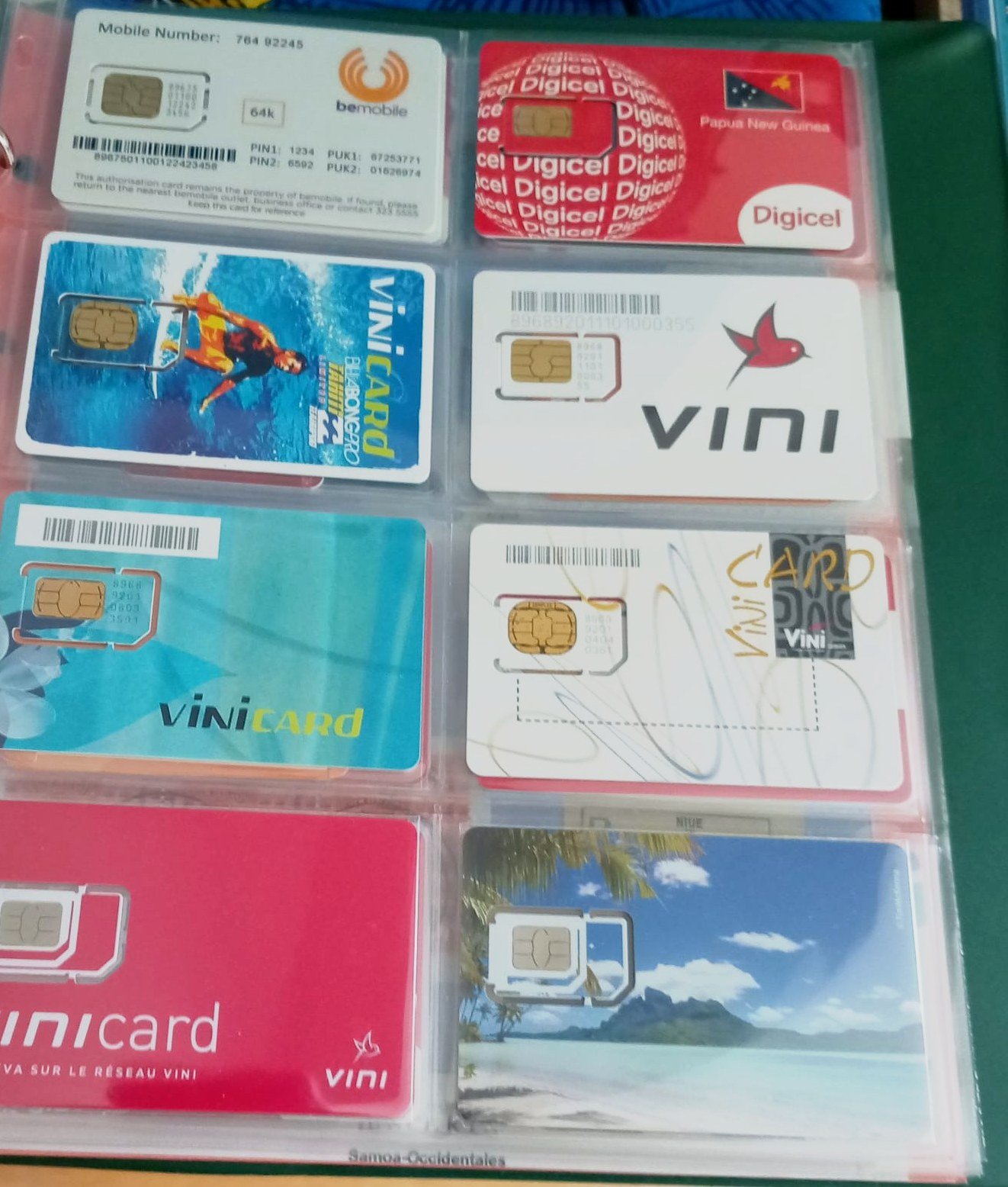
From the early 2000s, sensing perhaps the coming end of the chip card, I began collecting brand new SIM cards and GSM recharges from around the world. Today that collection is almost complete, with cards from 295 countries or autonomous regions. The latest direction is thematic: cards across all systems on the theme of the French mobile operator Orange, from every country that adopted the brand, historically around thirty across the five continents.
A further pillar of my collection is the complete sets. Besides the French public cards, I believe I hold the complete collections of two French territories: Wallis and Futuna, and the TAAF, the French Southern and Antarctic Lands.
How would you describe your collection to a newcomer? Do you have a specialty?
Like many other collections, stamps or coins for example, this one is a very meaningful tool for refreshing and building a real geographical, historical and commemorative culture.
How many phonecards do you have, and over how many years?
I estimate I have around 15,000 phonecards, but I want to be clear that my goal is not the number of cards, it is their diversity and their quality. On that last point I insist on one criterion: since the beginning of my collection I have replaced many cards several times in the search for what is called luxe quality.

Is there a card you would never part with?
These “exceptional” cards are exceptional to me because of their provenance and the journeys behind acquiring them, in particular four brand new SIM cards whose rarity needs no demonstration.
What gives you the most satisfaction in this hobby?
Beyond the gradual building of this fine collection, in my eyes at least, a great satisfaction has been weaving meaningful bonds over the years with other collectors across the five continents, from France all the way to the antipodes, by way of China, Australia and the small islands of the Pacific.
Have you ever made an unexpected discovery?
There have been many such cases, sought out at a given moment or recognised as rare many years later. I think in particular of an Orange SIM card from India that I obtained during the golden age of Houilles in the early 2000s, or the same Orange SIM card from Australia that I acquired only recently.
Have you taken part in the PIM?
I mentioned the SIT in Houilles earlier, and this is the occasion to highlight the creation of the PIM, the Phonecards International Meeting, by Davide Gambardella, and to thank him for working to keep phonecard collecting, télécartophilie, alive.
How did you hear about the WPC Club?
It was through the recent editions of the PIM, in Milan and then in Turin, that I discovered and joined the WPC Club.
What do you hope to find in the WPC community?
Naturally, I hope to find continuity for this collection, now that it faces the enormous constraint of the scarcity of cards and, with it, of collectors.
Anything else you would like to share?
This collection is a passion for me and, like many passions, it is not always rational, yet it remains a source of satisfaction. I hope to pass on this collection, built with so much time and dedication, to those who come after me.
From Houilles to the Falklands, François Fossard shows what it means to go out and find the cards. His collection is a living atlas of phonecard technology, and we are glad to share it as the first chapter of Collector Stories. If his journey speaks to you, you will find the same spirit waiting in our community of collectors.
